Depression and burnout
CBT for low mood, exhaustion and stress at work.
To therapy for depression and burnout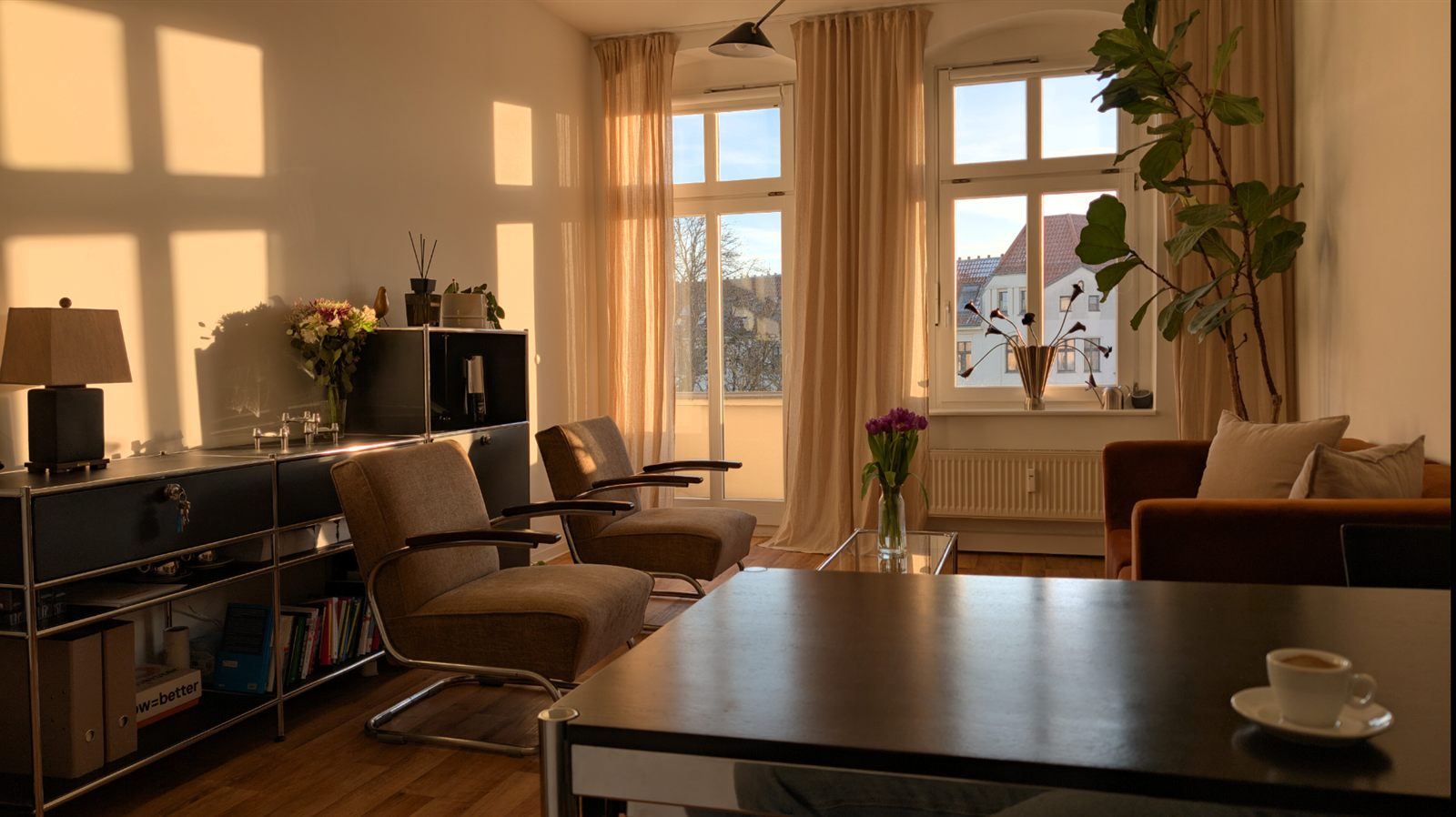
Panic attacks, social anxiety, a phobia or worry that will not switch off: anxiety disorders are common, and in many cases they respond well to treatment. At my private practice I offer cognitive behavioural therapy for them, in English or German, in person or online.
Anxiety is a healthy emotion. It warns us of danger and gets the body ready to act. It becomes a burden when it is too strong, comes too often or appears for no real reason. Many people then avoid more and more situations, and their lives grow narrower.
Around 15 in 100 adults in Germany have an anxiety disorder in any given year. Common forms include:
Many people at first mistake a racing heart, trembling or sweating for a physical illness. Others feel ashamed or do not know that help is available. This is one reason why anxiety disorders often go unrecognised and untreated for a long time.
A panic attack starts suddenly. Your heart races or skips a beat, you feel short of breath and your chest tightens. Some people get dizzy, sweat or tremble, and everything seems strangely unreal. In that moment, many fear they will faint, lose control or die.
The symptoms build to a peak and then subside, usually within 5 to 20 minutes. It feels threatening. If a doctor has ruled out physical causes, though, it is not dangerous: the body is sounding a false alarm.
Once you have been through this, you may start to dread the next attack. This fear of fear leads many people to avoid places where it might happen again, such as a crowded train, the supermarket or a lift. That brings brief relief but keeps the cycle going: you never find out that the panic passes even if you stay.
If you have sudden chest pain or severe breathlessness, please call 112 immediately. Have any new symptoms you cannot explain checked by a doctor first. At the start of therapy, a physical check-up is also advisable, for example of the heart and thyroid. I will give you a recommendation for it.
If you are thinking about ending your life or need help straight away, you will find the numbers under In an acute crisis.
As a licensed psychological psychotherapist, I work with cognitive behavioural therapy (CBT). For anxiety disorders, it is the most thoroughly researched approach. It typically has three building blocks: understanding what keeps the anxiety going, examining frightening thoughts and facing feared situations. How much weight each one gets depends on you.
You tell me what brings you here and how anxiety shapes your everyday life. Together we decide whether CBT is the right way forward.
When does the anxiety appear, what goes through your mind, and how do you avoid it? You learn how the body's alarm system works and why avoidance keeps the fear alive in the long run.
We look at interpretations that frighten you, for example the thought that a pounding heart means a heart attack. What is the evidence for and against it? Over time, a more realistic view emerges.
You deliberately seek out situations you fear or bring on the body sensations you dread, such as a racing pulse from climbing stairs quickly, if there is no medical reason against it. You also drop the things you usually do to feel safe. We start with small steps, and you help set the pace. The aim is to discover that you can cope with the anxiety and that what you fear usually does not happen.
Towards the end, you practise more and more on your own. We note what has helped you and what you can do if the anxiety returns.
The professional standard in Germany is the S3 clinical guideline on the treatment of anxiety disorders (version 2, 2021). For panic disorder, agoraphobia, generalised anxiety disorder and social anxiety disorder, it names CBT and certain types of medication as first-line treatments. If one does not help enough, it advises switching to the other. Combining both is then also an option. For specific phobias, it recommends CBT with exposure exercises.
You have a say in which route suits you. Only doctors can prescribe medication. I offer CBT. If I think it would help to discuss medication with a doctor, I will tell you openly.
Online programmes based on CBT can bridge the gap until therapy starts or be used alongside it. The guideline advises against using them as the only treatment. For panic disorder and agoraphobia, regular aerobic exercise can be a useful addition.
A session lasts 50 minutes and usually costs €151.55. The fee may vary depending on the work involved and is exempt from VAT.
Mine is a private practice for privately insured patients, people entitled to Beihilfe (the medical allowance for civil servants) and self-paying patients. I do not bill your health insurer directly. You receive an invoice from me based on the official German fee schedule for psychotherapists (GOP). Whether and how much your private health insurer or Beihilfe reimburses depends on your policy and the rules that apply to you. It is best to check with them beforehand, including if they require a report from a doctor.
No. You can contact me directly. In a personal crisis, short-notice appointments are possible, subject to availability. If you need help straight away, please use the emergency numbers.
That depends on how strong the anxiety is, how long it has been there and what else is going on in your life. Changes often become noticeable after a few weeks. We agree together how many sessions make sense and review this along the way.
Not necessarily. For panic disorder, agoraphobia, generalised anxiety disorder and social anxiety disorder, CBT on its own is a first-line treatment, as are certain medications, mainly antidepressants. These usually take two to four weeks to work and must be prescribed by a doctor. For a specific phobia, the guideline recommends CBT with exposure exercises. The evidence for medication there is insufficient.
The guideline advises against the routine use of tranquillisers such as benzodiazepines because they can lead to dependence.
No. First we work out together what keeps your anxiety going. We plan exercises jointly, in small steps and at a pace you help set. Nothing happens against your will. These exercises can still be hard work, but they are at the heart of CBT for anxiety.
Yes, via a secure video connection, including the first session. This can be a relief if leaving the house is hard for you right now. Because avoidance can make anxiety worse over time, we talk openly about whether and when sessions at the practice become part of your exercises.
Please send me a short email if you would like to meet online, even if you booked via Doctolib, so that you receive the link in advance.
As an addition, yes. The closed group is not designed for anxiety disorders as such, though. Its focus is communication training: with the same people, on fixed dates, you practise speaking up, setting boundaries and handling conflict. For social anxiety, the guideline mainly recommends individual therapy. Such training can complement it but does not usually replace it.
The group meets at the practice only. A session lasts 100 minutes and costs €135. Please enquire by email or using the form.
Anxiety is part of life, and it protects us. The aim of therapy is therefore not to make it disappear, but to stop it from running your days. Nobody can promise in advance how far you will get. We will, however, regularly review together what has changed.
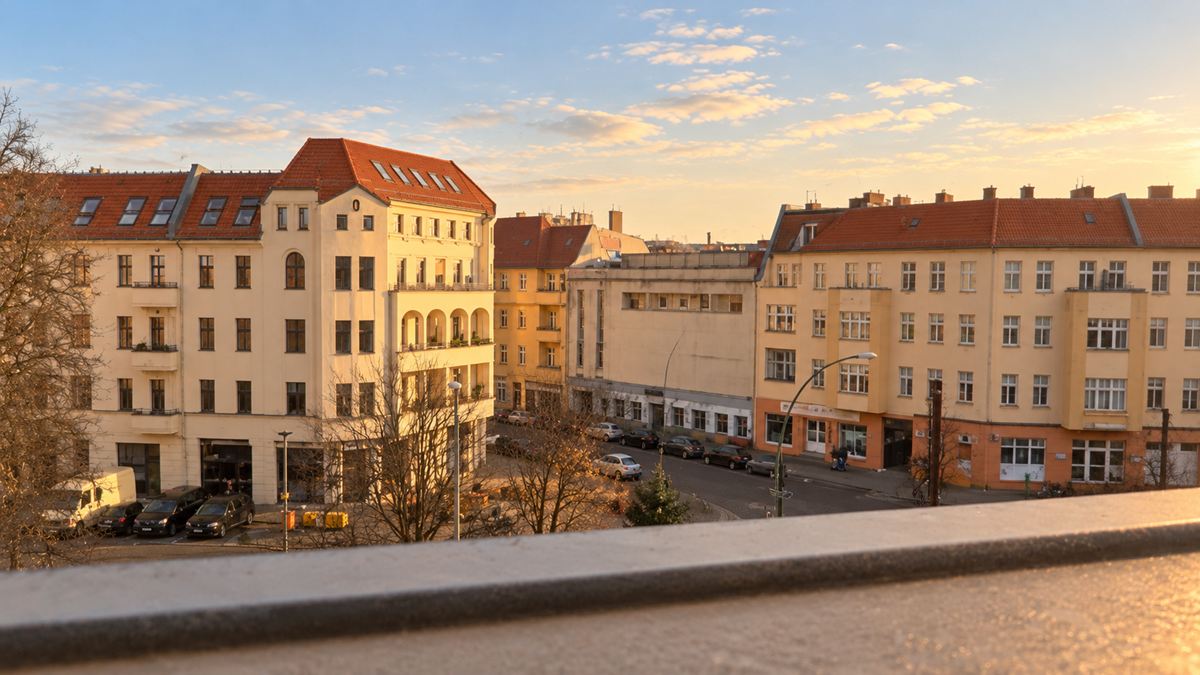
We meet at my practice in Berlin-Pankow, between Prenzlauer Berg and Weißensee, or via a secure video connection. If you would like an online appointment, please send me a short email, even if you booked via Doctolib, so that you receive the link in advance.
Prenzlauer Promenade 190
13189 Berlin-Pankow
To book via Doctolib you need a free Doctolib account. If you would rather not create one, request your first appointment through my booking page or send me an email.
The practice works by appointment only: your appointment is reserved for you. If you cannot make it, please cancel at least 12 hours in advance. If you cancel later than this or miss an appointment, I charge a cancellation fee. If you booked via Doctolib, cancel there directly so that the slot becomes available again.
The practice is on the third floor, and unfortunately there is no lift. Please come at the agreed time so that you do not have to wait and sessions in progress are not disturbed. If you are early, there are cafés nearby.
From the Prenzlauer Allee/Ostseestraße stop it is a 2- to 3-minute walk. Trams M2, M13 and 12 and bus 156 stop there. The M2 takes you to Alexanderplatz in about 15 minutes. The nearest S-Bahn station is Prenzlauer Allee (S41, S42, S8, S85), about 12 minutes on foot or 2 stops on the M2.
You do not need to know what your anxiety is called. Book the first session via Doctolib, request it without a Doctolib account via my booking page (in German), or email me.
CBT for low mood, exhaustion and stress at work.
To therapy for depression and burnoutSetting boundaries and resolving conflict, together in a closed group.
To group therapyIndividual and group therapy, second opinions, written statements and everything else at a glance.
To the overview